
When the numbers are right, short-term rentals are lucrative. There’s a reason over 4 million hosts list properties on Airbnb.
It’s exciting to watch cash flow roll in from your vacation rentals. However, if you’re not thinking about your tax strategy, you could be leaving serious money on the table. So, how are you handling your books today? Spreadsheets? QuickBooks? A CPA? Or are you just winging it?
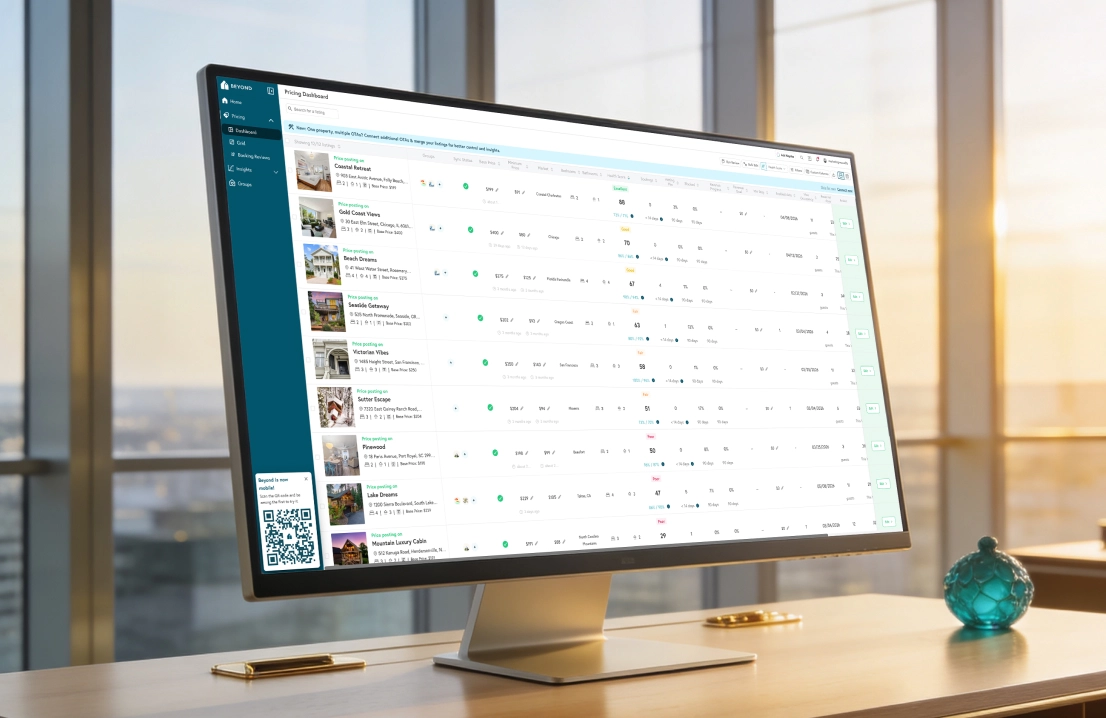
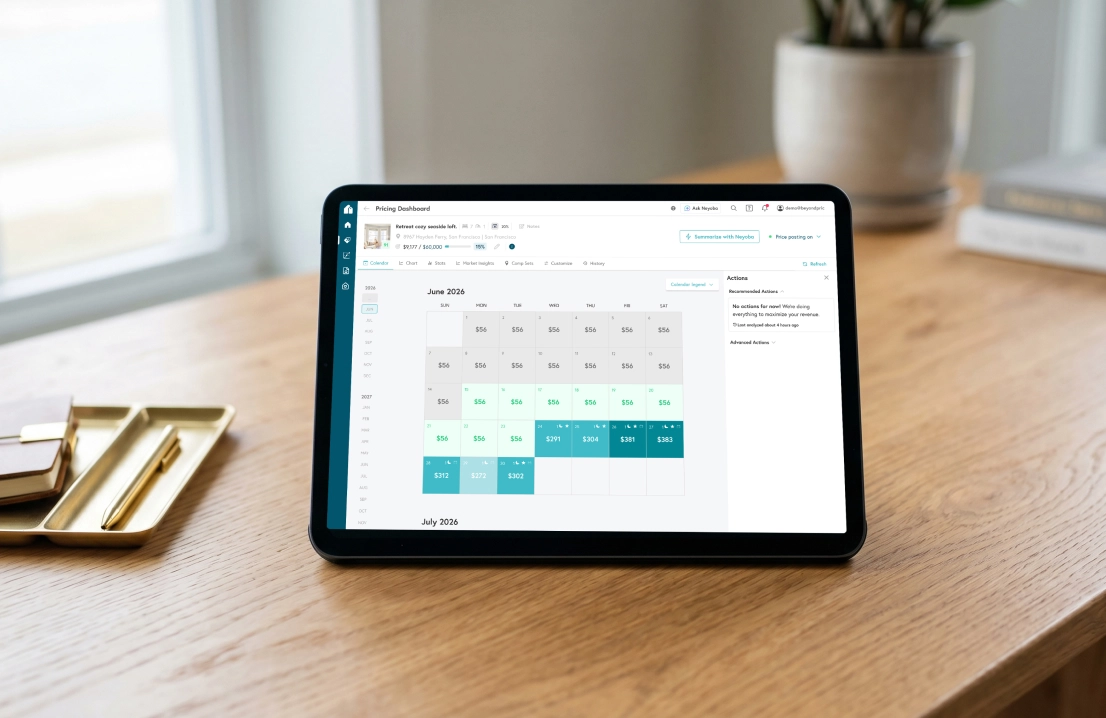
Solid short-term rental accounting software paired with a smart tax strategy can boost your earnings, protect you from penalties, and help you make better decisions to grow your portfolio. Combine those benefits with dynamic pricing tools like Beyond, and you’re setting yourself up to get ahead and stay ahead.
In this article, we’ll break down:
- What a tax strategy actually means for STR hosts
- Commonly missed deductions that could save you thousands
- The risks of having no system in place
- How to streamline your accounting for better books — and a better bottom line
What Is a Tax Strategy and Why Does It Matter for STRs?
Yes, we all think about taxes in April. But as an investor, your tax strategy isn’t just a once-a-year task, it’s an ongoing system for tracking, categorizing, and planning your finances to maximize deductions all year long.
For STRs, that means:
- Tracking all income (Airbnb, Vrbo, direct bookings, cleaning fees, etc) all year round.
- Documenting expenses throughout the year.
- Pro Tip: Tracking incoming and outgoing payments is much easier with rental property accounting software
- Planning ahead for depreciation and capital improvements (like furniture upgrades, appliance replacements, or major repairs).
- Keeping personal and business finances separate. Some investors do this by creating an LLC or using separate credit cards and bank accounts.
- Know whether your STR income should go on Schedule C or Schedule E. In general, if you’re providing services like breakfast, daily cleaning, or concierge, you may need to report income on Schedule C. If you’re simply renting out the property, you likely report on Schedule E.
- Look into tax exclusions like the 14 day rule, which allows you to earn rental income tax-free if you rent out your home for 14 days or fewer in a year. Home owners often use this to their advantage if their city hosts events like a festival or big game.
At the end of the day, your tax strategy is about making sure every dollar going in or out is accounted for and categorized correctly — so tax season is just another task, not a nightmare.
Commonly Missed Deductions for STR Hosts
Tax deductions are one of the biggest benefits of owning rental property, but only if you’re tracking them.
If you’re using an investor-friendly accounting platform, it’ll help you avoid missing key deductions. But if you’re still doing things manually, watch out for these often-overlooked write-offs:
- Platform fees (Airbnb, Vrbo, etc.)
- Cleaning and supplies (paper towels, laundry soap, toilet paper, light bulbs) ● Furniture and upgrades (beds, appliances, TVs — these may be depreciated over time)
- Mileage (travel to and from your property is deductible!)
- Marketing and software (yes, your Beyond subscription is deductible too)
What Happens If You Don’t Have a Tax Strategy?
If you’re not keeping clean books, it’s not just costing you time. It’s costing you money. Without a clear system, you risk:
- Missed expenses or lost receipts: Where did that $6,000 roof repair invoice go? ● No mileage tracking or vendor payments recorded: Gas isn’t cheap — don’t skip this deduction.
- Inaccurate books, leading to overpaying taxes. For example, this can happen if you’re filing the wrong tax classification or missing key tax exclusions like the 14 day rule.
- Stressful scrambles in April, or worse, overpaying a CPA extra to clean up your books
Bottom line? Don’t sabotage your profits by ignoring your books until tax time.
Easy Ways to Track Business Expenses
The easiest way to stay on top of your expenses? Use accounting software. There are plenty of tools out there, but we recommend choosing one built specifically for real estate investors.
Our partner, REI Hub, is purpose-built for rental property owners and STR hosts. With it, you can:
- Sync bank accounts and credit cards to track income and expenses
- Set up automation rules to categorize expenses
- Run property- and portfolio-level reports
- Generate tax-ready Schedule E reports
- Track depreciation over time
- Give your CPA secure access when needed
Pair REI Hub with Beyond, and you’ll have the perfect combo: optimized pricing and audit-ready books.