
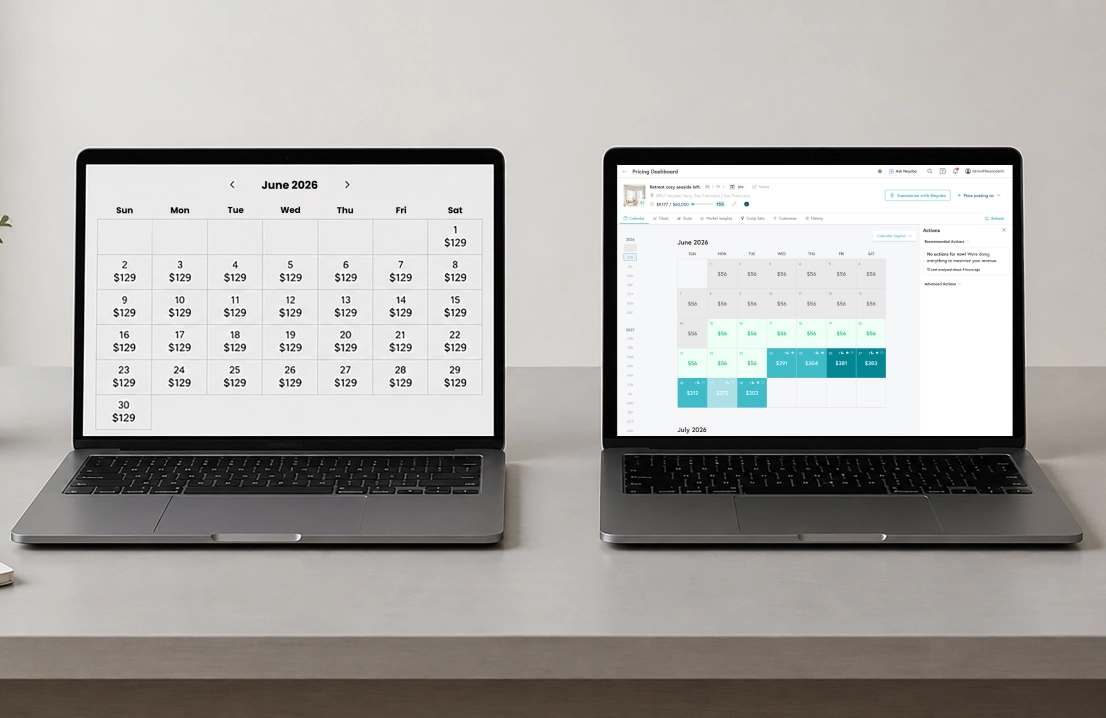
Managing prices manually works until the market starts moving faster than you can keep up.
It's 9 am on a Thursday, and you've just found out there's a conference in town next week. Half the city is already booked out, but your properties are still sitting at Monday's rate. When you manage 5 listings, that kind of surprise takes half an hour to fix. With 30, time works against you, and the market won't wait.
The short-term rental market moves fast, supply is dense, and demand shifts before you have a chance to react. That's when the manual pricing vs dynamic pricing debate stops being a matter of preference and becomes a real operational problem.
What is manual pricing in vacation rentals?
Manual pricing is where almost every property manager starts. Some adjust rates based on gut feel, experience, or market instincts; others take a more structured approach using spreadsheets, year-over-year comparisons, and competitive analysis.
But in practice, manual rate management involves far more tasks than most teams actually complete: reviewing calendars, updating prices across multiple OTAs, adjusting minimum stay requirements, closing gaps between bookings, or setting up price alerts on Airbnb. And yes, it works, but only up to a point. When you're managing 30, 50, or 100 listings, sticking with manual adjustments means your team spends their days juggling spreadsheets, notifications, and back-to-back updates. There's always a moment when the feeling of control gives way to that unscientific but very real doubt: "Did I actually hit SAVE before closing out the calendars?"
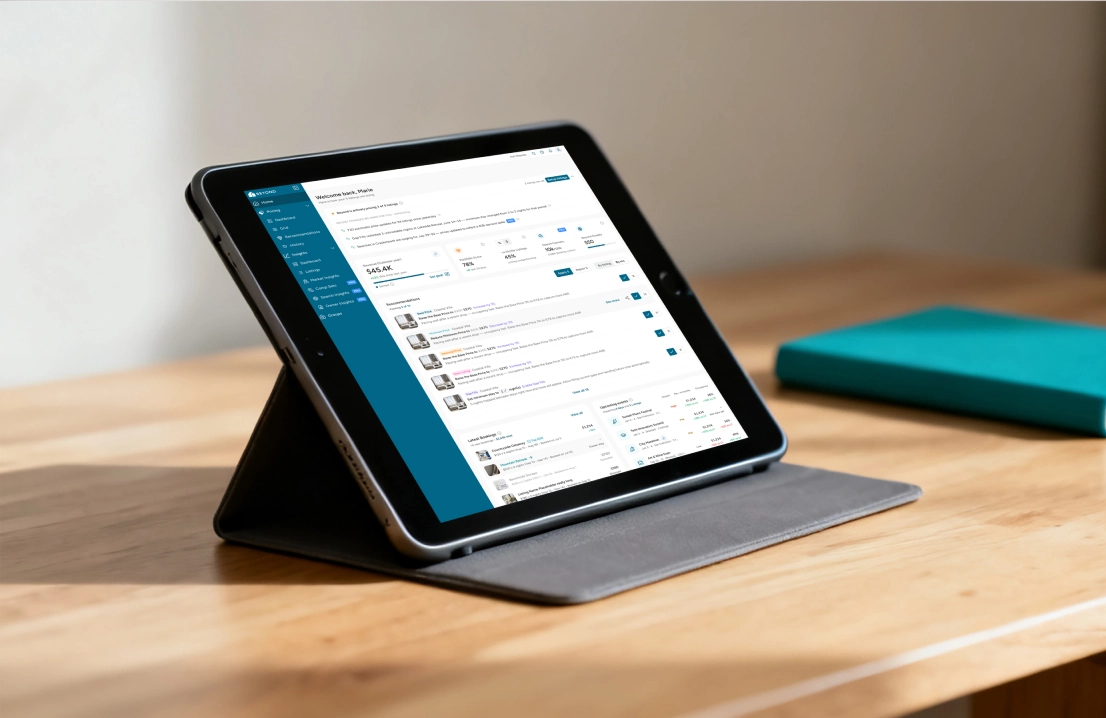
The real limitations of manual pricing at scale
Manual pricing can hold up for a while, but as soon as your property count grows, things shift quickly.
If you manage 50 properties and spend 20 minutes a week reviewing and adjusting rates per listing, that's already more than 16 hours a week spent on pricing alone. And that's before factoring in tasks like tracking local events, analyzing booking pace, benchmarking your average daily rate against the market, updating OTAs or optimizing gaps between reservations. In theory, everything looks under control. In practice, your competitors have already adjusted their rates three times while your team was still copying and pasting numbers into spreadsheets.
You open the calendar and realize half the market is charging $80 more per night while your properties are still at Tuesday's rate. So you scramble to update every available listing, adjust the tariffs, and hope no one missed a zero. That's where inconsistencies creep in: when you're managing dozens of properties manually, not every listing gets the same level of attention. It's not a bad strategy; it's the operational ceiling of manual pricing at scale.
And the problem doesn't stop at revenue. When an owner asks why their apartment was listed cheaper than the one next door, "the market was slow" doesn't cut it. As your portfolio grows, manual pricing starts to consume everything: there's no clear data to back up pricing decisions and never enough time for anything else.
What dynamic pricing does that manual pricing simply can't
Dynamic pricing for vacation rentals doesn't work for occasional check-ins. It continuously analyzes market signals: demand forecast, local events, competitor availability, booking pace, and historical market behavior. While manual pricing has you updating rates in Google Sheets, dynamic pricing adjusts automatically, with no manual review required.
React before the market peaks
A concert, a conference or a long weekend can send demand surging within hours. Dynamic pricing adjusts your rates before the calendar fills up, setting them too low to capture the opportunity.
Fill the gaps before they go to waste
Dynamic pricing optimizes stay restrictions to improve occupancy without turning every two-night gap into a small operational crisis. Multiply those micro-adjustments across dozens of properties, and you get a significant direct impact on occupancy and RevPAR.
Scale without losing control of your portfolio
Keeping track of what's happening across all your listings shouldn't mean hunting through OTAs, calendars and spreadsheets. Revenue management software brings order to that chaos. From a single dashboard, your team can spot listings with out-of-range pricing, identify which properties are underperforming against the market, and review RevPAR vs. market benchmarks in minutes.
Let the data speak for you with owners
There's a big difference between telling an owner "your apartment was 12% below market this weekend" and "we thought the price was right." Revenue management software generates those reports automatically, pulling in metrics such as occupancy, ADR, and RevPAR vs. market, so that you can share them directly with owners. The conversation shifts from "trust me" to "here's the data." That's the real difference between manual pricing and dynamic pricing in vacation rentals: it's not just about automating tasks; it's about turning pricing into a genuine competitive advantage.
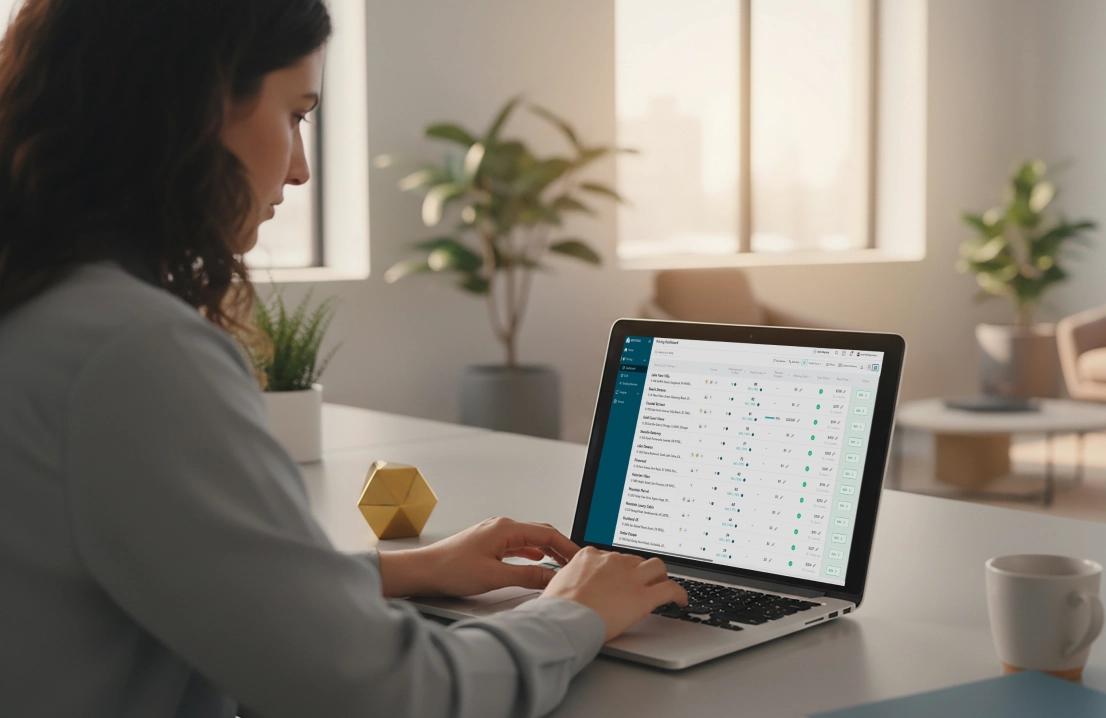
When does making the switch actually make sense?
There's no universal tipping point. Some managers with 5 listings need automation from day one, while some small portfolios can still run reasonably well on manual pricing.
The switch starts to make sense when these signals appear: you're spending more than 5 hours a week reviewing rates, you're seeing ADR discrepancies between similar properties that are hard to explain, or you're accumulating vacant nights that no one is optimizing in time.
But it's also worth making the move if you operate in high-volatility markets like Miami, Nashville or the Smoky Mountains. A listing getting buried on Airbnb or Booking.com during a demand spike can be costly, and telling an owner "the platform wasn't showing your property properly" doesn't hold up.
Moving from manual pricing to dynamic pricing doesn't mean losing control. You can set price floors and ceilings, review recommendations, and approve adjustments before automating anything. The software doesn't override your strategy; it stops your team from chasing the market with a spreadsheet that's always one step behind.
And it's not just about revenue. When an owner finds out their property is underperforming against a similar one managed by a competitor using dynamic pricing, "this is how we've always done it" is a tough position to defend. The financial argument also matters: from around 15 to 20 listings, the time your team spends on manual pricing typically exceeds the cost of a revenue management software subscription.
How to make the case to your owners
This is where many property managers get stuck. They know they need to automate part of their pricing, but they're not sure how their owners will react, especially the ones who expect to sign off on every rate change. Because who doesn't have at least one owner who treats a rate adjustment without notice like a five-alarm emergency?
The key is explaining that you're going to use real-time market data to maximize their property's revenue. You're not handing the keys to an algorithm and crossing your fingers. The simplest way to start is to propose a 30 to 60-day trial on one specific property. When you compare RevPAR, ADR, occupancy, and booking window against manual pricing results, you move from instinct to actual data.
The second step is making your reports work for you. Owners want straightforward answers to very specific questions: "How do you know this is the right rate?"
With revenue management software, walking owners through the switch becomes a lot easier. And when the inevitable question comes up about whether automating prices means losing control, the answer is simple: dynamic pricing adjusts rates within the parameters you define, using data that no team can manually review around the clock.
If you're navigating these conversations with your owners right now, you don't have to figure it out alone. Beyond's Owner Guide walks you through how to present dynamic pricing clearly so you can get buy-in faster and spend less time justifying every rate change.
Manual pricing or dynamic pricing: the decision that defines your portfolio
Manual pricing still works, but it doesn't scale the same way for everyone. For some managers, the switch makes sense at 10 listings; for others, it comes later. But as your portfolio grows and the market gets more competitive, the difference between manual pricing and dynamic pricing shows up in time saved, operational scalability, and the ability to defend your rates to owners.
The good news is that getting started with dynamic pricing doesn't mean giving up your judgment. You can set guardrails, review recommendations, and increase automation gradually. The goal isn't to replace your expertise; it's to stop your team from adjusting rates one by one every Friday night like it's some kind of endurance sport. If you're weighing the decision, the Owner's Guide can help you walk your owners through the shift before taking the next step.
Frequently asked questions about manual pricing vs dynamic pricing
Does dynamic pricing work for small portfolios of fewer than 10 listings?
Yes, especially in competitive markets with high seasonality or frequent demand shifts. Even with fewer than 10 listings, adjusting prices by property, date, and actual demand can make a real difference without requiring you to review calendars by hand.
Can I still control my prices if I use dynamic pricing software?
Yes. You set minimum and maximum prices, seasonal rules, and your preferred level of automation. The software works within those parameters and applies adjustments based on market data, but it doesn't replace your professional judgment.
How long does it take to implement a dynamic pricing system across my portfolio?
It depends on your portfolio size and the quality of your initial setup. In many cases, the system can be up and running within a few days. The important work comes after: refining your strategy, reviewing results and making sure the rules align with your revenue goals.
What's the real revenue difference between manual pricing and dynamic pricing in vacation rentals?
Manual pricing can perform well for small portfolios or stable markets, but it typically reacts too slowly to demand shifts, events or changes in booking pace. Dynamic pricing adjusts rates using real-time market data, which helps capture revenue opportunities that manual review tends to catch too late or miss entirely.

.webp)
