
The Macro Themes Shaping 2026
- Demand Will Be Discovered in Search, Not Bookings
Guest search intent data has become the earliest and most accurate indicator of demand. The gap between search peaks and booking peaks now averages less than three weeks, a window where proactive operators can win or lose the year.The STR businesses that infuse their marketing, pricing, and inventory decisions with search data will own the future.
Takeaway: Integrate search data into your revenue management strategy, from forecasting and pricing to merchandising and distribution. Guests are already planning their 2026 stays, and having search data lets you anticipate demand shifts early, optimize your pricing strategy, and capture bookings before your competitors even realize the trend.
- Shorter Booking Windows, Same Lengths of Stay
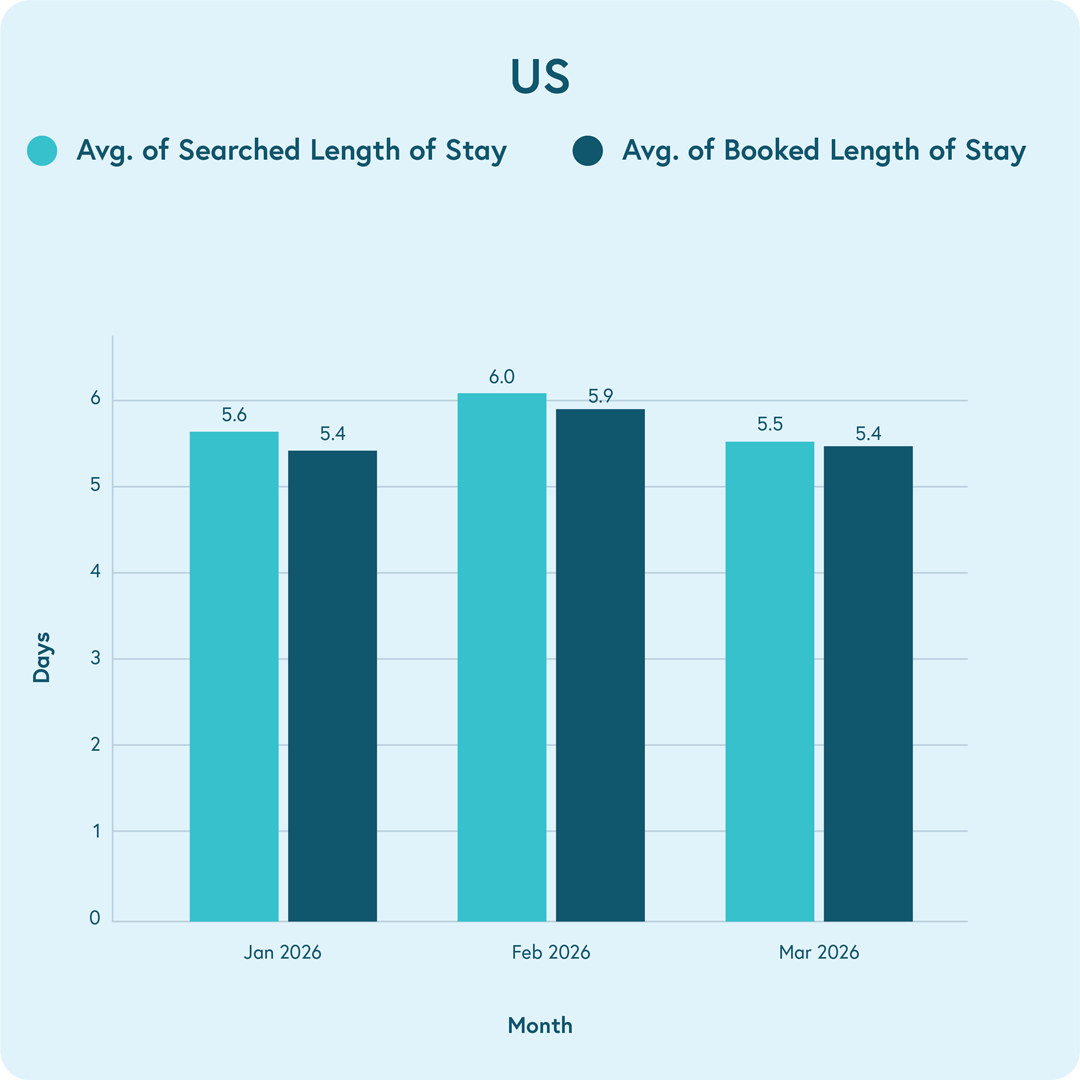
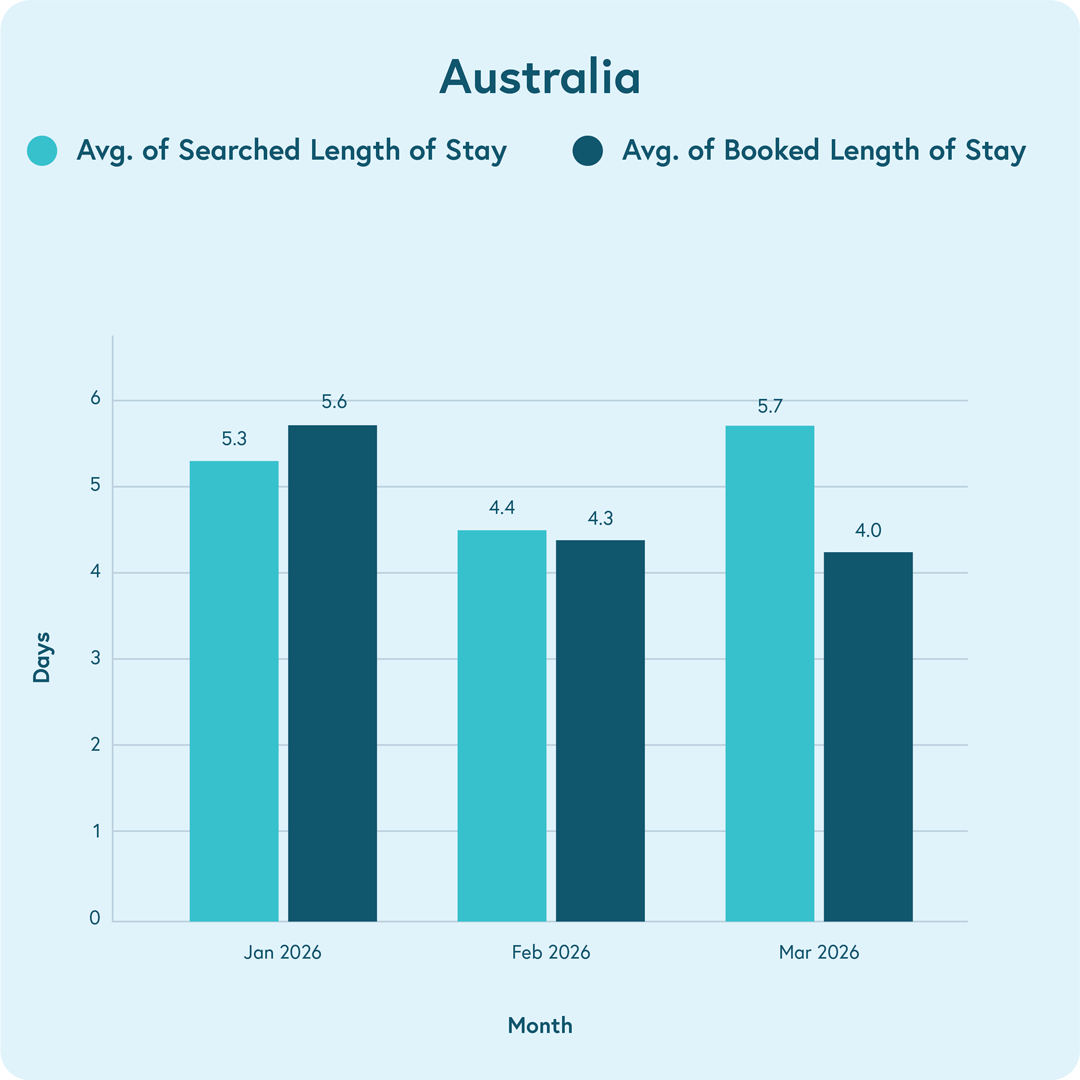
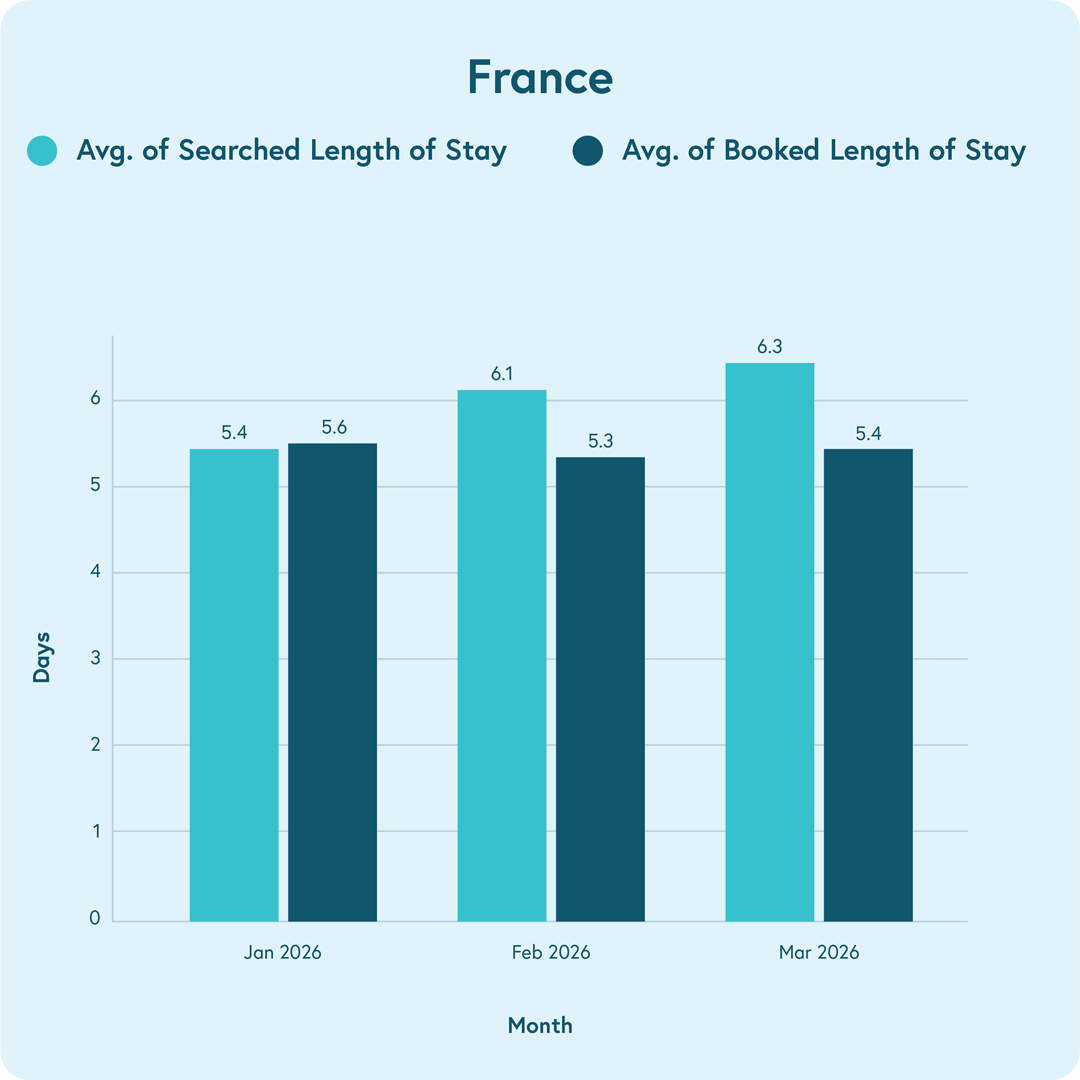
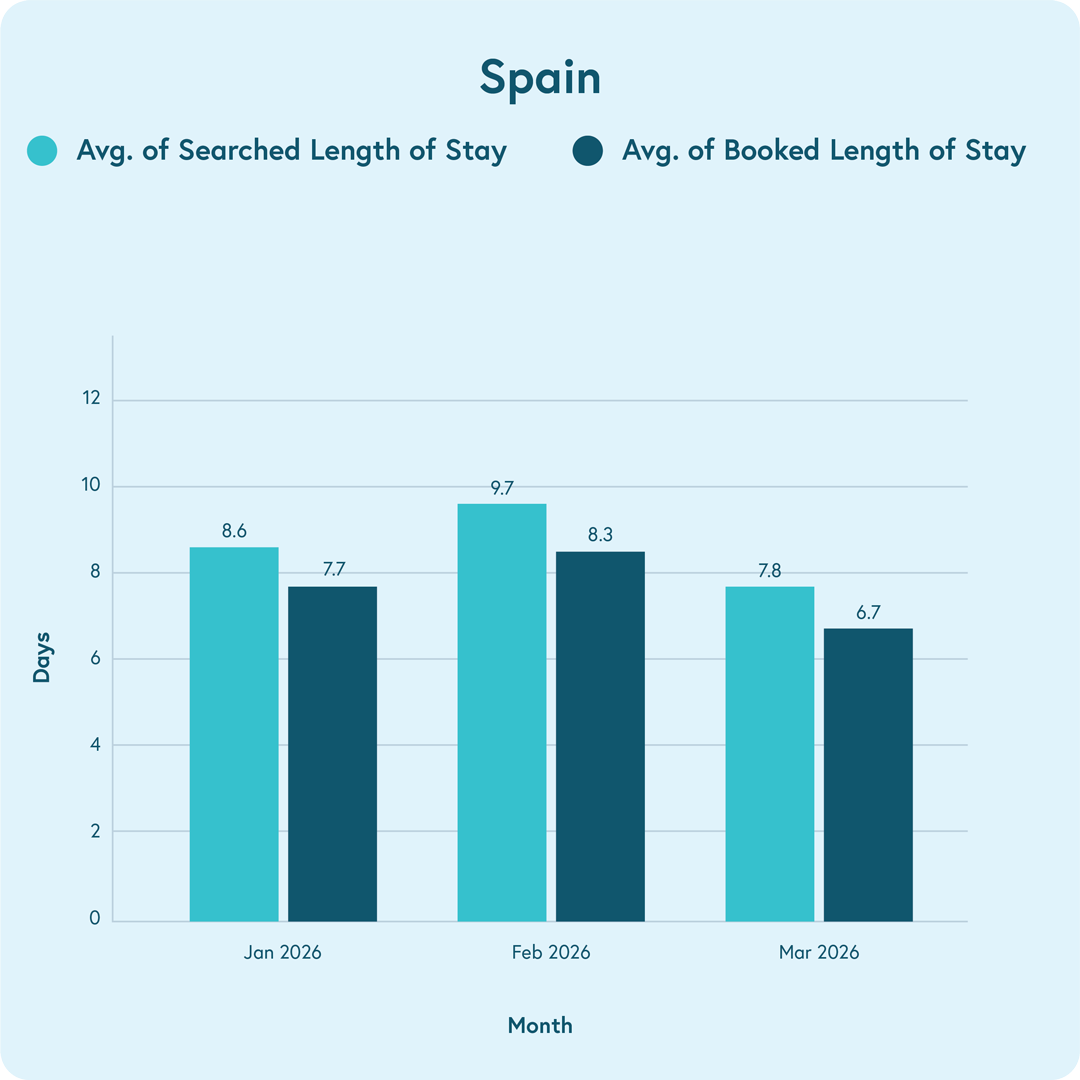
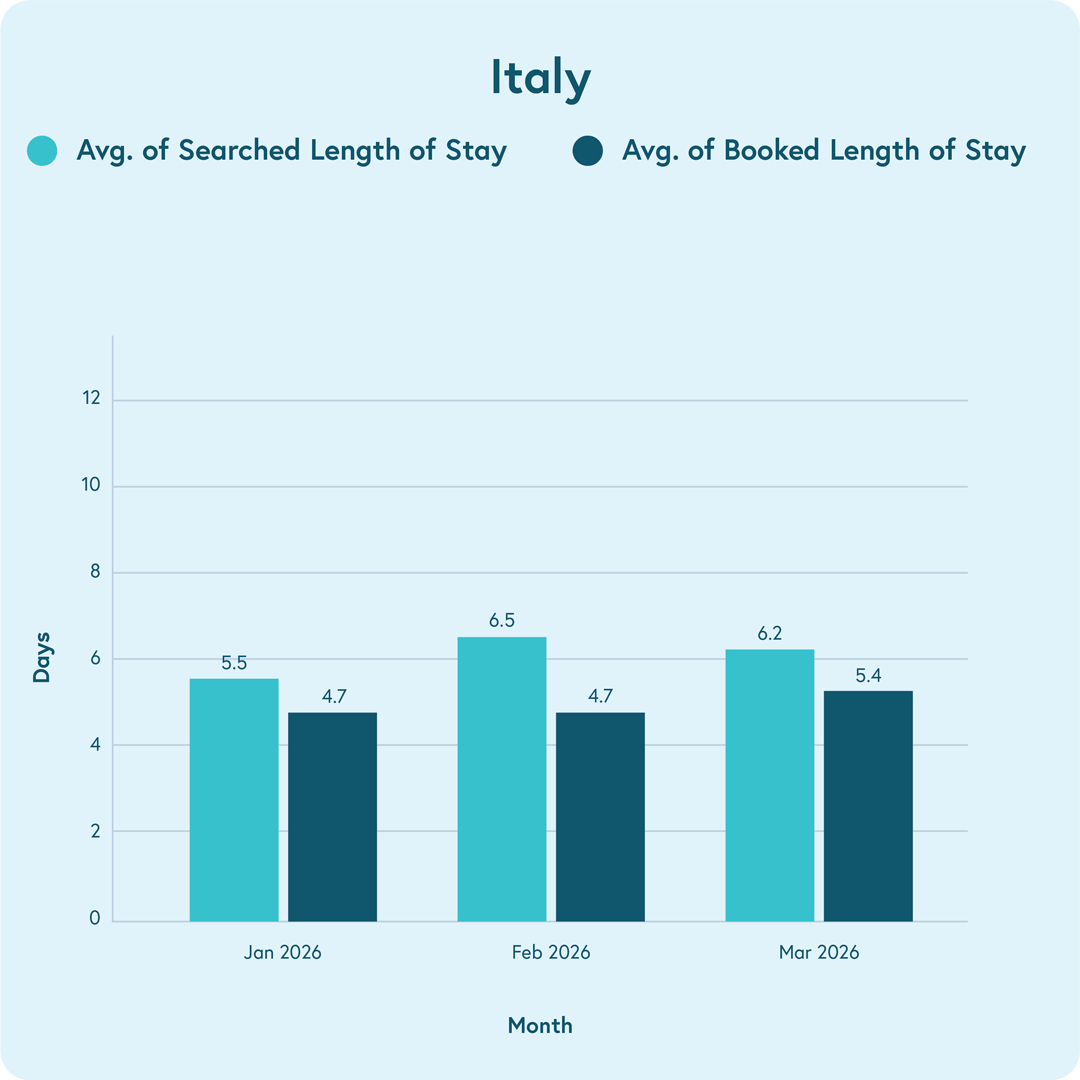
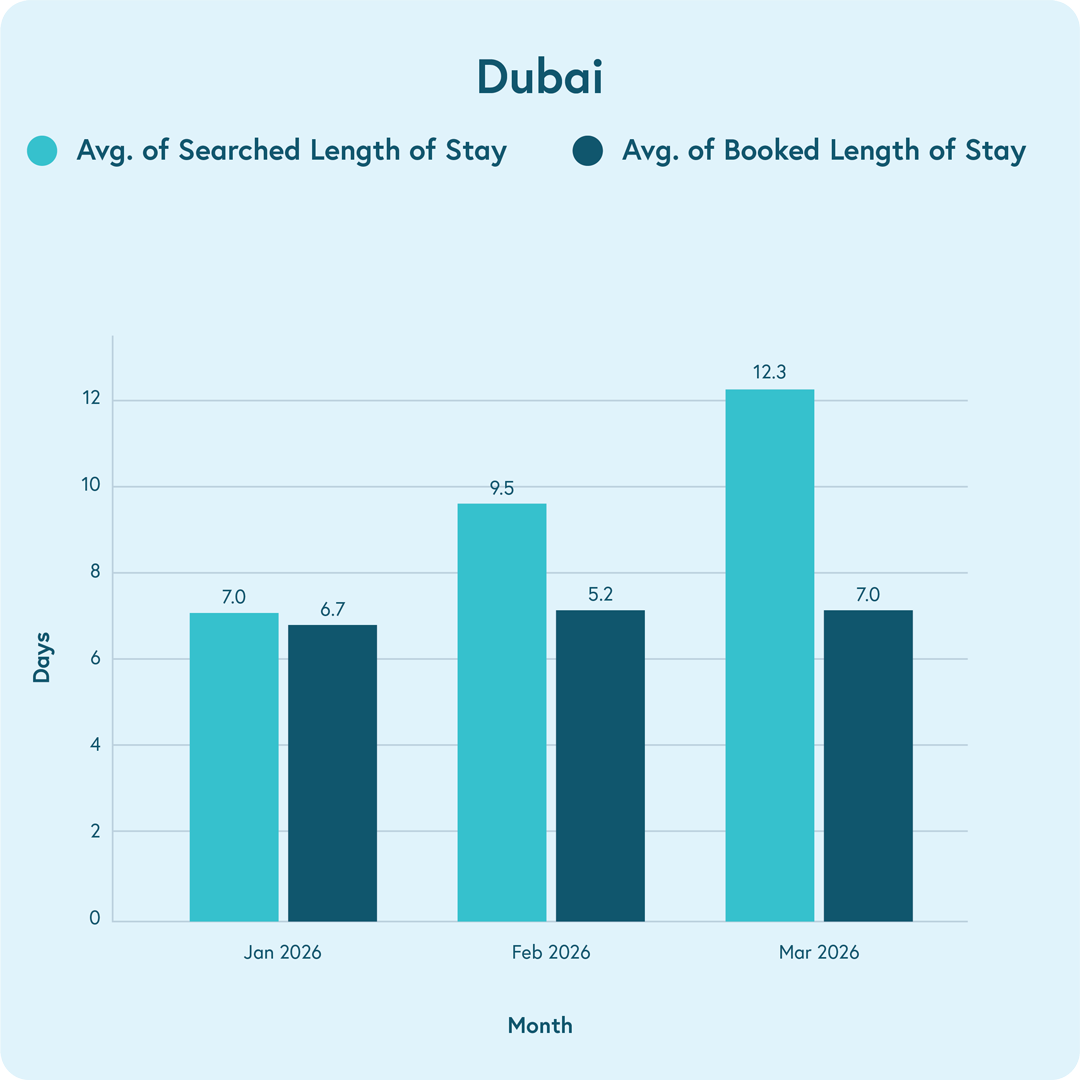
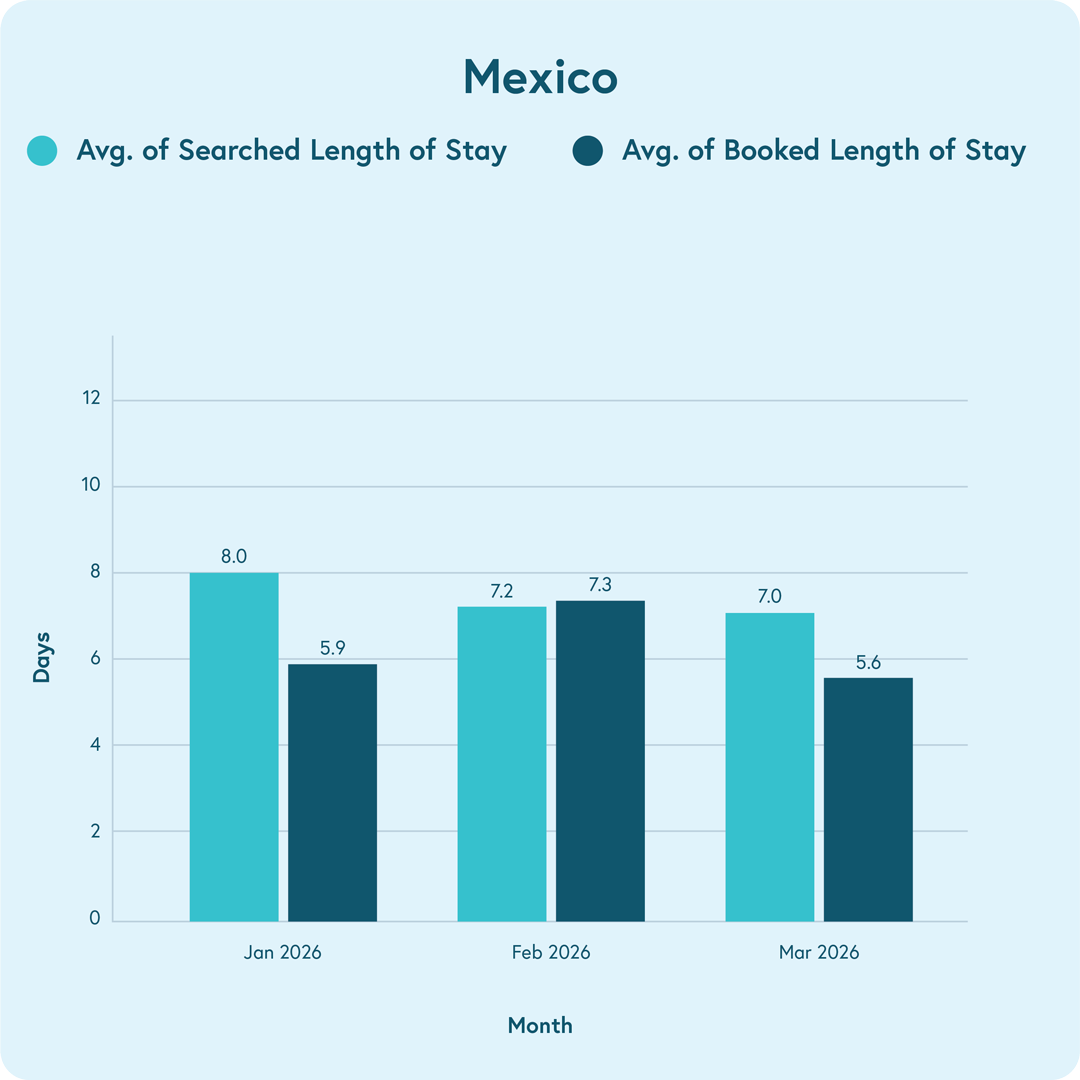
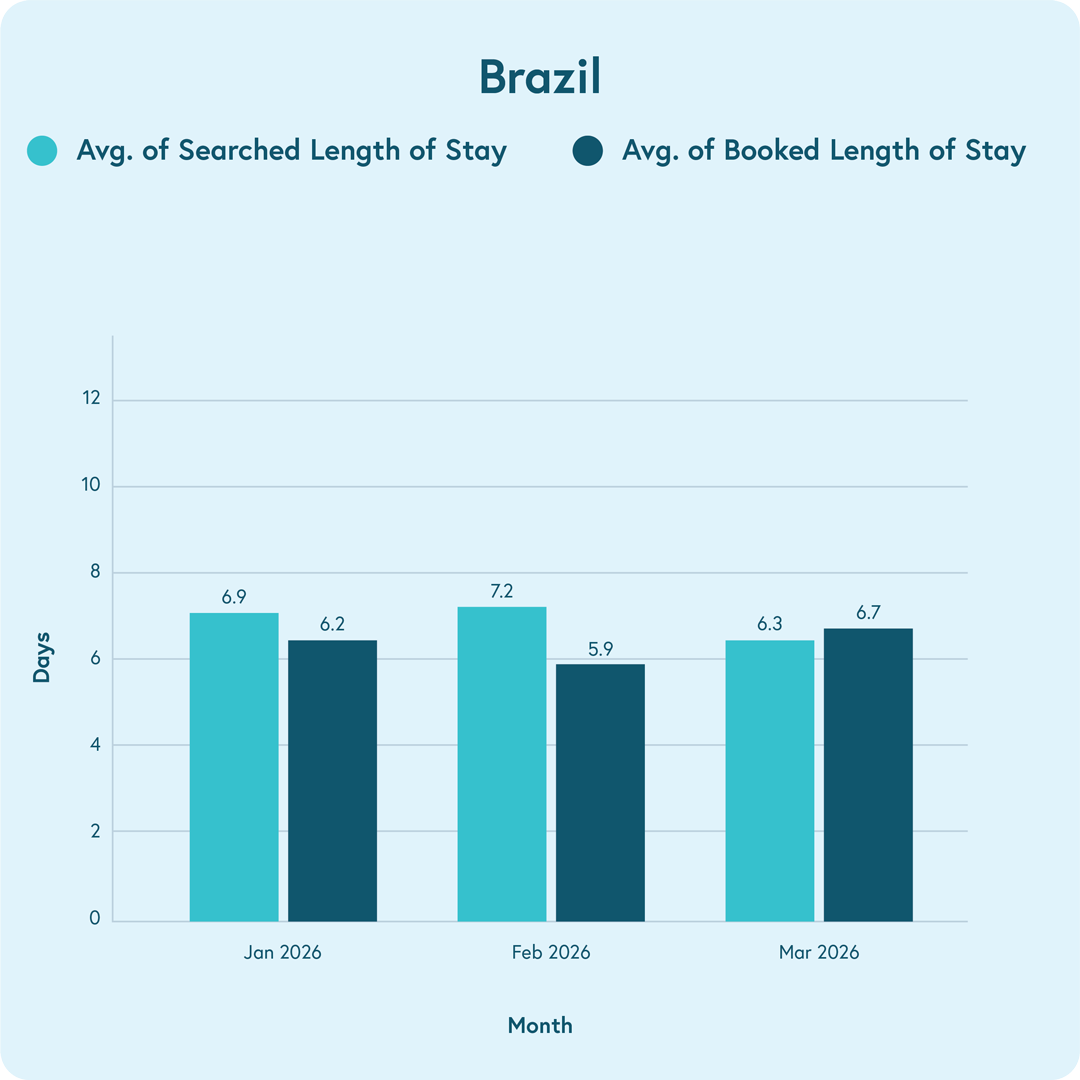
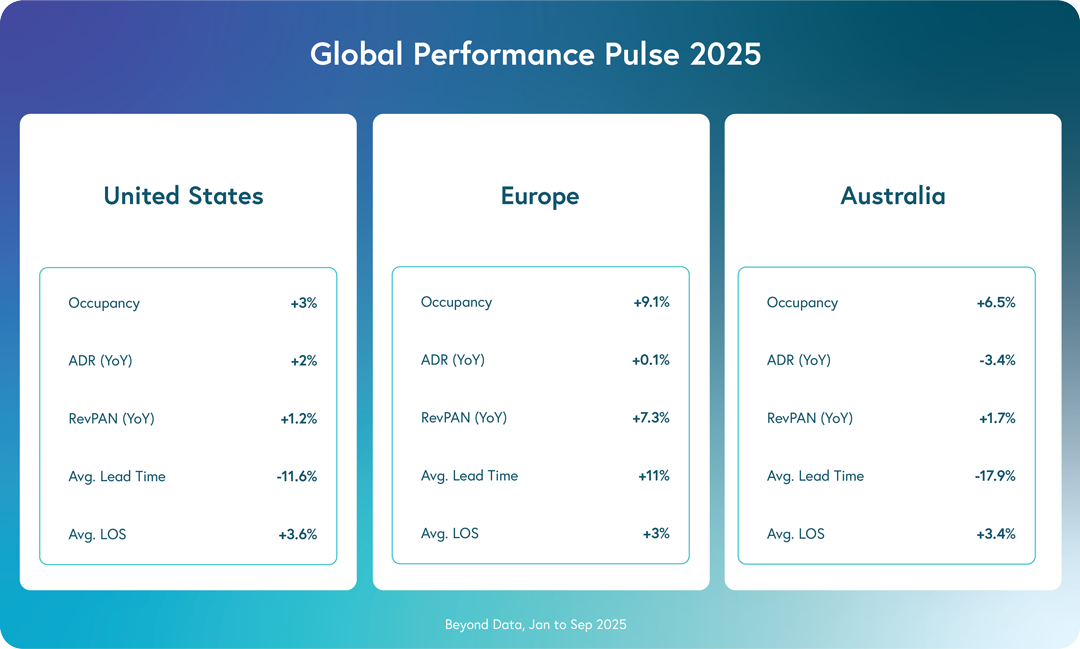
Lead times will keep compressing as consumer confidence in last-minute travel strengthens. The data shows guests are booking closer to check-in but staying the same number of nights, proof that spontaneity is replacing planning, not duration.
Takeaway: For revenue managers, this changes everything. Forecasting cycles must shorten, and systems must respond daily, not weekly. As trends change in 2026, prepare to adjust performance expectations alongside changing booking windows.
- Distribution Parity and the Direct Revival
Online Travel Agencies (OTAs) like Airbnb and Booking.com remain powerful, but 2025 data showed the quiet resurgence of direct channels. Operators that paired dynamic OTA pricing with well-timed direct offers achieved stronger revenue per available night (RevPAN) than those relying solely on marketplace exposure.
Takeaway: Parity is no longer about price, it’s about presence, ensuring consistent value and messaging across every touchpoint.
- Merchandising Becomes Monetization
Revenue management and marketing are converging; dynamic content, images, descriptions, amenities, and promotions are now as influential as price in conversion.
Takeaway: Treat digital merchandising as a live revenue lever.
- AI Shifts from Automation to Orchestration
The next evolution of artificial intelligence in revenue management isn’t just about price optimization, it’s about orchestration. Agentic AI will coordinate tasks across forecasting, pricing, and marketing, freeing managers to focus on strategy rather than settings.
Takeaway: AI becomes a co-pilot, not a controller. “AI will raise, not replace, the human role. The best revenue managers will use AI to handle complexity, freeing themselves to focus on strategy, relationships, and creativity – what humans still do best,” said Gerard Murphy, VP of Product at Beyond.

The Outlook in One Line
The next advantage in revenue management will not come from raising prices, but from raising intelligence, the ability to sense, decide, and act faster than the market.