Updating prices manually can work when you're managing five properties, and you still know off the top of your head which weekends sell themselves.
But as your portfolio grows, reviewing rates one by one stops being about being in control and starts becoming hours lost every day. You end up chasing adjustments that come too late, catching errors that slipped through, and leaving nights on the table that could have been priced better.
Understanding how vacation rental dynamic pricing software works helps you turn those endless reviews into a data-driven revenue strategy, with rates you can defend to owners and fewer decisions made on gut feel.
What Is Dynamic Pricing Software for Vacation Rentals?
Your PMS knows who's checking in, who's checking out, and which nights are still open. Dynamic pricing software calculates what each night should actually be worth. One keeps the operation running; the other makes sure you're not selling a peak-demand weekend at the same rate as a slow Tuesday in November.
If you set your summer prices in January and never revisit them, you're making decisions with outdated information. The market may be booking faster than expected, a local event may have popped up, or your competition may have shifted strategy. The software reads those signals and adjusts the price before the opportunity passes. But the real value isn't just automation. It's being able to explain to an owner why a rate went up, came down, or held steady.
How Vacation Rental Dynamic Pricing Software Works, Step by Step
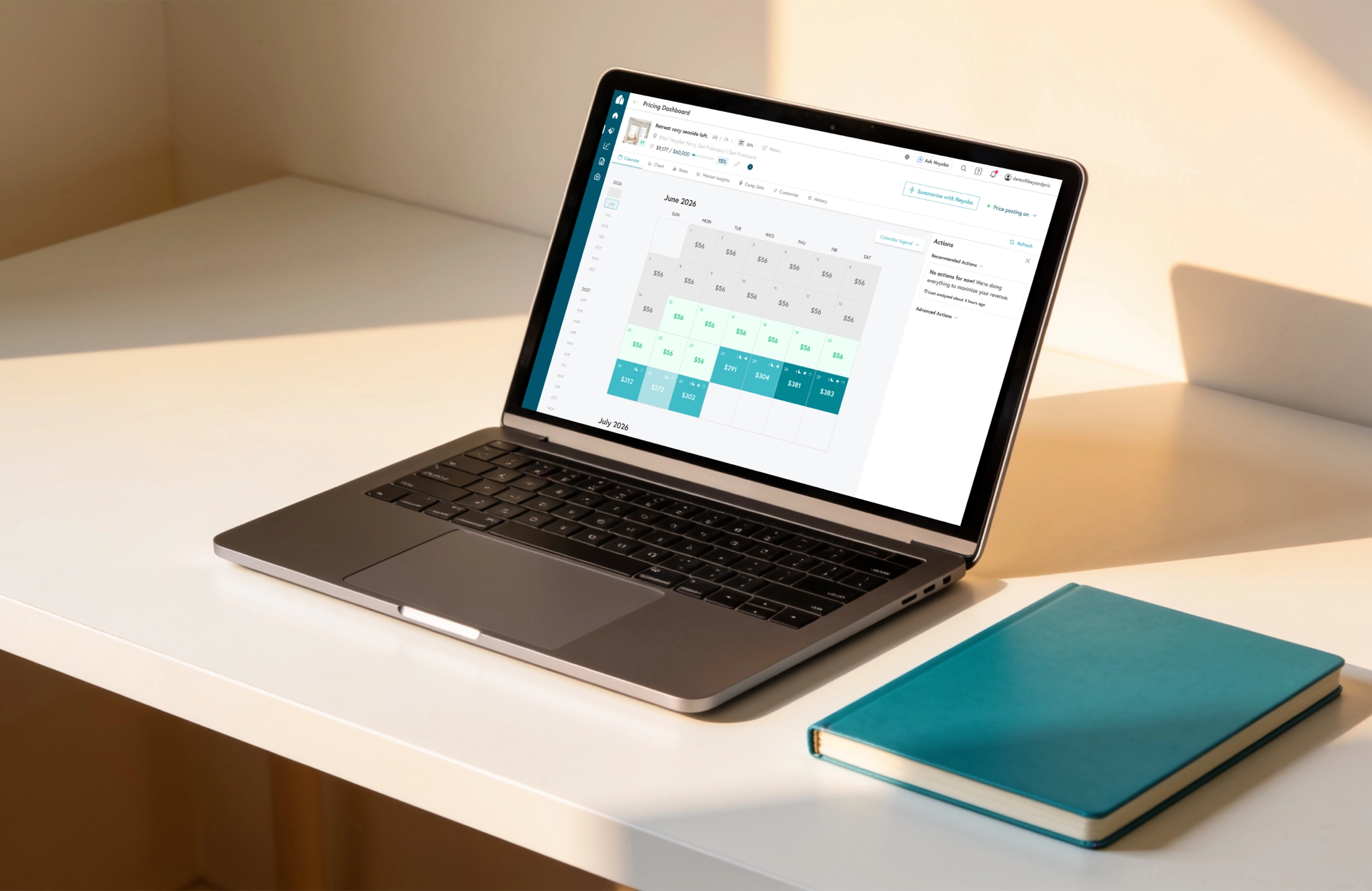
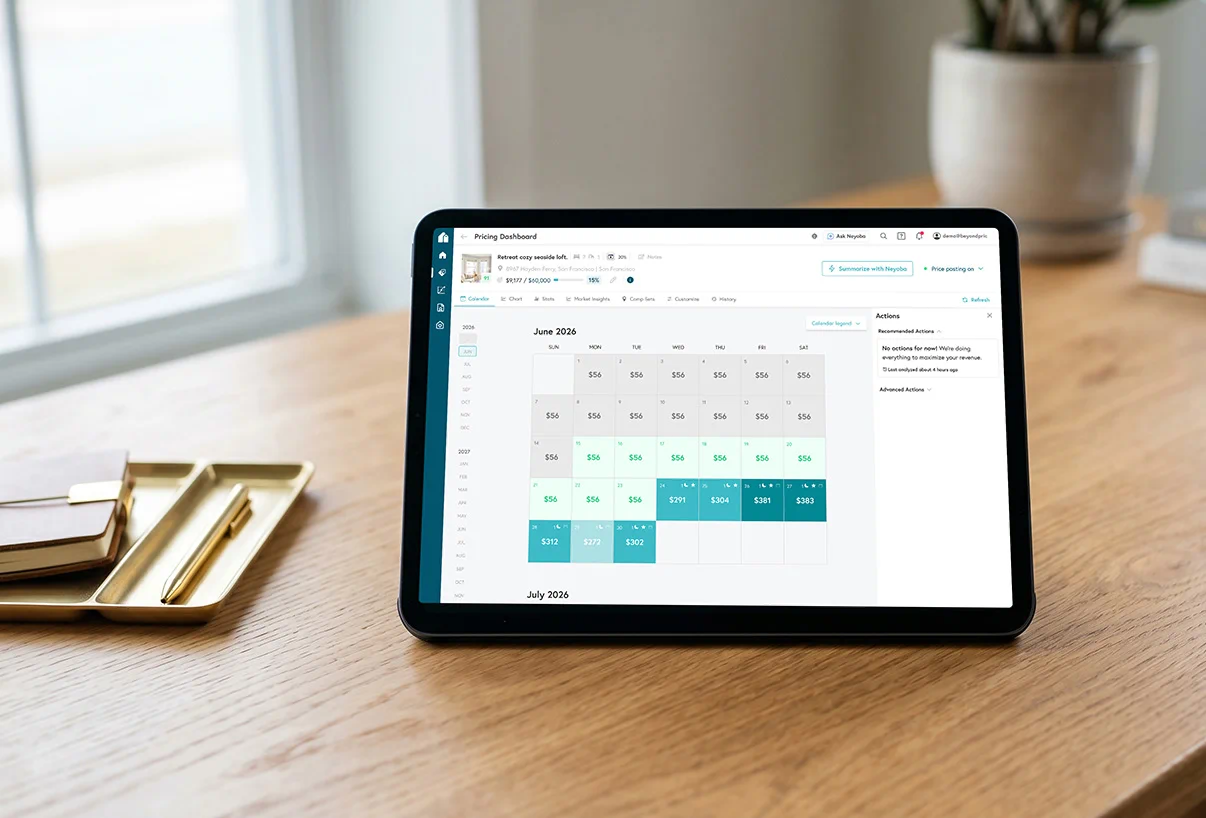
The process starts before you open the first calendar of the day. The software is already reading market data, future reservations, availability, comparable listing prices, local events, and demand shifts. With that information, it calculates which rate makes the most sense for each night and each property. A high-demand date can go up; a night with low traction can adjust to stay competitive. The key is that it doesn't apply the same formula across your entire portfolio.
From there, prices are published automatically to connected channels. Your team keeps control over minimum and maximum prices and rules, but stops reviewing every rate by hand as if the market were willing to wait.
The process doesn't end when the price goes live, either. The software learns from what happens next. Which dates book fast, which stay cold, which properties respond better to certain adjustments, and where the market moves ahead of schedule. That continuous improvement is also the logic behind Beyond's dynamic pricing algorithm: turning real market signals into increasingly refined price recommendations.
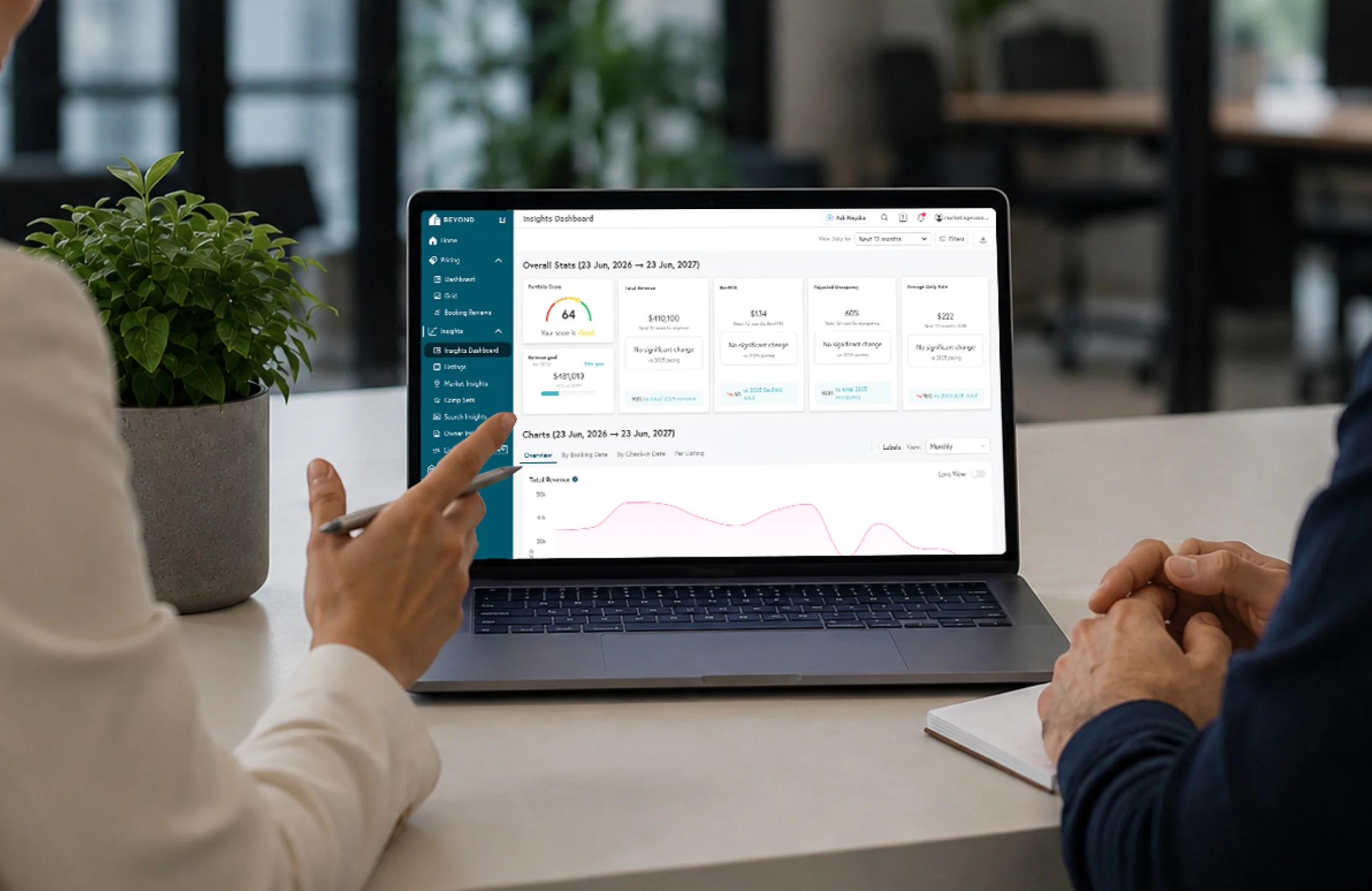
What Data Does the Software Analyze to Set Prices?
When an owner asks why their listing dropped in price, the answer shouldn't be "because the tool recommended it." It should be: because demand for that date is trending slower, the market has more availability, comparable listings are still open, and the booking window is closing.
That's what the software provides: context. It tracks how demand is moving, how much availability remains in the market, which similar listings are still open, when guests tend to book, and which dates are starting to heat up before the calendar makes it obvious.
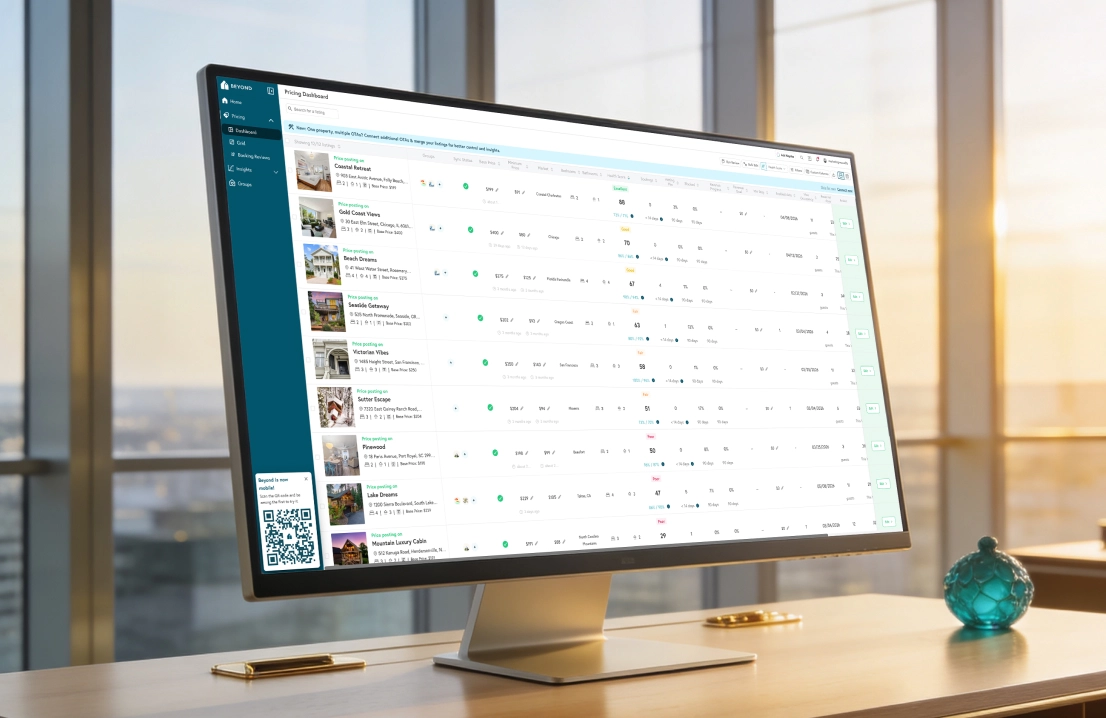
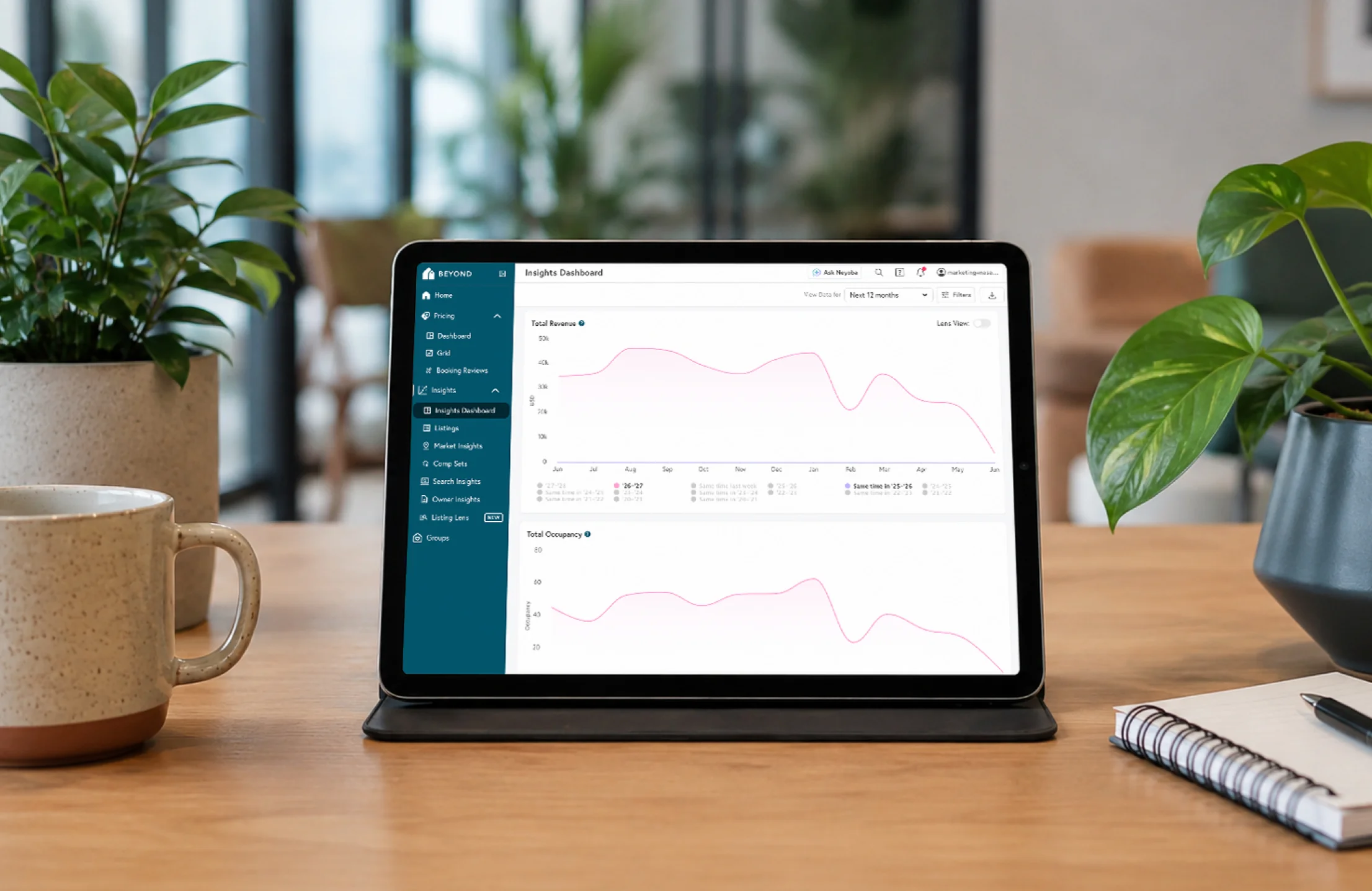
It also factors in each property's historical performance, including Average Daily Rate (ADR), occupancy, booking pace, peak seasons, and nights that typically need a push. That combination allows for more precise price adjustments than a manual review squeezed in between owner calls.
These signals don't surface the same way across every platform, so it's worth evaluating which dynamic pricing tools for vacation rentals offer data detailed enough for your specific market and portfolio type.
That's the value of a data-driven vacation rental pricing strategy. One that doesn't look at today's price in isolation, but understands what's happening around each night before deciding whether to push higher, adjust, or hold.
PMS and OTA Integration: How It Fits Into Your Stack
As your portfolio grows, the challenge isn't just calculating good prices. It's making sure those prices reach every channel correctly and on time. That's where integration makes the difference.
Your PMS tracks which nights are available, which reservations have come in, and what rules apply to each property. The dynamic pricing software uses that information to calculate rates and push them back to your channels, updated. You keep working in your existing PMS while prices sync across Airbnb, Vrbo, and Booking.com with no double data entry and no copy-paste errors.
The important thing is that automating doesn't mean losing control. It means you stop repeating the same work property by property.
When evaluating how to choose revenue management software for vacation rentals, check that it integrates with your PMS, that you can manage shared rules across property groups, and that it can explain where each recommendation comes from.
What Results Can a Property Manager Expect?
Good dynamic pricing software should be felt day to day, not just in an end-of-month report. Your team spends less time on repetitive adjustments, makes decisions with more context, and can explain to owners why a rate went up, came down, or held steady without improvising on the spot.
The improvement isn't about filling the calendar at any price. It's about increasing revenue per available night, avoiding underpricing when demand supports charging more, and catching underperforming dates early enough to act.
When that part of the work stops depending on manual reviews, the portfolio can grow without every new listing adding more pressure on the team or requiring a new hire just to handle work the software can absorb.
From Manual Pricing to Automated Revenue Management
Moving from manual pricing to dynamic pricing doesn't mean handing your strategy over to a machine. It means letting technology handle the repetitive work while you define the boundaries, review performance, and make the calls that actually matter.
If your portfolio is growing, the difference shows up quickly. Less time on manual adjustments, more consistency across the full portfolio, and stronger arguments for every rate you present to owners.
To go deeper into the mechanics of dynamic pricing and see real examples from property managers, download Beyond's Dynamic Pricing Guide.
FAQ: How Does Vacation Rental Dynamic Pricing Software Work?
What is the difference between dynamic pricing and static pricing in vacation rentals?
Static pricing typically starts from a manual review or fixed seasonal rules. The problem is that the market doesn't move in such neat blocks. If demand shifts, occupancy rises, or a local event comes up, a static rate can leave money on the table or react too late.
Dynamic pricing reassesses each night based on real market signals. It's not about moving rates for the sake of it. It's about making sure your strategy doesn't depend on prices set months ago.
Does dynamic pricing software work with any PMS?
It depends on the tool and its integrations, but good dynamic pricing software should connect with major PMS platforms and channel managers without requiring you to switch your current system.
Your PMS handles reservations, availability, and rules. The software uses that information to calculate prices and push them back to your channels, updated.
Can I control minimum and maximum prices if I use pricing software?
Yes, and you should. Minimum and maximum prices are part of the strategy. You define the profitability floor, the limits per property, the seasonal rules, and any necessary restrictions. The software optimizes within those boundaries. Automating doesn't mean losing control. It means applying your rules more consistently across your entire portfolio.
How long does setup and integration with my current system take?
It depends on portfolio size, your PMS, and how your pricing rules are currently organized. Generally, the process involves connecting the system, reviewing properties, setting minimum and maximum prices, configuring rules, and validating that prices are syncing correctly across channels.
For a professional property manager, the priority isn't activating it as fast as possible. It's activating it correctly. A solid initial setup avoids pricing surprises, uncomfortable owner conversations, and manual corrections down the line.
Can dynamic pricing push my rates below what I want to charge?
It shouldn't, as long as your minimum prices are configured correctly. That minimum acts as a floor. The software can adjust rates to stay competitive, but it won't cross the limit you've set.
This is one of the most common concerns from owners, so it's worth addressing upfront. Dynamic pricing isn't an open door to discounting. It's a way to adapt rates to the market without losing sight of profitability.